"SECURITY"
Lorikeet Security or Flowtriq? We Tested Both
"When the security "PDF" arrives and everyone sighs — why Lorikeet changes that"
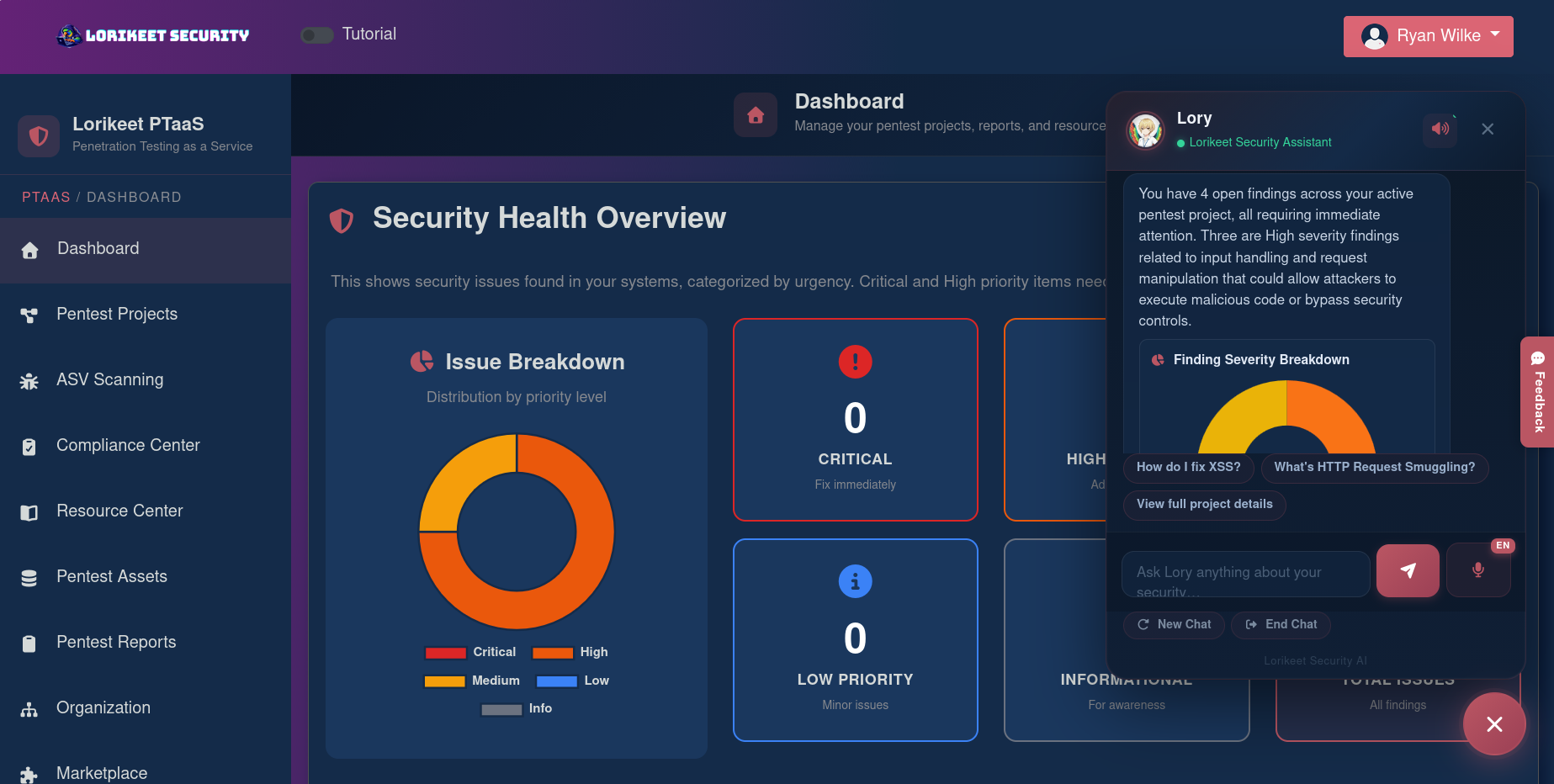
You know the drill — your engineering lead emails a 50-page pentest PDF, product and legal skim it, and three months later the same vuln still exists. That dead-weight report is the opposite of security that scales. Lorikeet Security is an offensive security platform that replaces one-off PDFs with a live, 24/7 attack-surface program: continuous monitoring, manual pentests across apps/cloud/networks, compliance automation, and an AI assistant (Lory) in a real-time portal. Why it matters: startups get audit-ready controls and ongoing remediation velocity without turning security into a blocker. Bottom line — it’s pentesting that behaves like a product, not a relic.
"The Business Case"
Security should be an accelerator for funding, customer trust, and product velocity — not a roadblock. For startups courting enterprise contracts or raising institutional capital, audit-readiness (SOC 2, ISO, PCI, HIPAA, etc.) and demonstrable remediation processes materially reduce sales cycles and valuation risk. Lorikeet’s model replaces intermittent checks with an always-on program: manual, high-fidelity testing reduces false positives and wasted engineering cycles; continuous monitoring reduces mean time to detect; integrated compliance workflows shorten audit preparations. The combined effect is measurable: faster deal closes, lower remediation effort per finding, and a reduced likelihood of costly breaches or compliance fines. From a go-to-market perspective, having a single pane of glass (tests + retests + compliance evidence) becomes a sales artifact — not just a checkbox — improving conversion for security-conscious buyers. My hot take: for startups selling to regulated buyers, security tooling that doubles as sales collateral is underrated ROI.
"Key Strategic Benefits"
- →
Operational Efficiency: Lorikeet’s live portal centralizes findings, retesting, and remediation guidance so engineers spend less time chasing context and more time fixing. The result: tighter developer-security collaboration and faster ticket resolution cycles.
- →
Cost Impact: By eliminating noisy automated results and including free retesting, engineering hours per verified finding drop. Fewer false positives and audit-ready artifacts reduce third-party consulting and legal costs tied to compliance remediation.
- →
Scalability: Coverage across web, APIs, cloud, container platforms, AD, and even AI-agent/IoT assessments means the security program scales with product complexity — no forklift change when you move from MVP to multi-cloud production.
- →
Risk Factors: Be aware of scope creep and budget creep — continuous testing plus broad coverage can balloon costs if not scoped to business-critical assets. Also, manual testing is premium; ensure ROI by prioritizing crown-jewel assets and integrating findings into sprint planning.
"Implementation Considerations"
Plan for a 4–8 week initial onboarding: asset inventory, threat-modeling prioritization, baseline manual pentest engagements, and portal access for stakeholders. You’ll need a cross-functional steering group (CTO/security lead, product manager, and DevOps) and two practical changes to workflow: integrate Lorikeet findings into your issue tracker and allocate sprint capacity for verified fixes + retests. Compliance automation will require mapping existing controls (IAM, logging, incident response) to attestation artifacts — expect a 2–6 week cadence to produce audit-ready evidence for SOC 2 or ISO. Change management: treat Lorikeet as an ongoing vendor partner — schedule monthly remediation reviews and quarterly red-team or specialized assessments as your product or threat profile changes. From my workflow: I treat the portal like a product backlog — prioritize findings by business impact, not CVE score.
"Competitive Landscape"
While tools like Flowtriq excel at instant DDoS detection and auto-mitigation for uptime-critical stacks, Lorikeet is better suited for end-to-end offensive testing and compliance workflows. Flowtriq’s strength is automated, network-focused availability protection (a clear winner if your risk surface is DDoS-heavy and you need instant mitigation). Lorikeet’s differentiator is breadth — manual, expert-led assessments across apps, APIs, cloud, and specialized areas (blockchain, IoT, AI agents) plus compliance automation and a live remediation portal. Pricing and target audience differ: Flowtriq targets infra-heavy ops teams seeking runtime protection; Lorikeet targets startups needing audit readiness, developer-friendly remediation, and high-fidelity pentesting. Balanced view: if your immediate risk is availability attacks, Flowtriq may be the tactical add-on; if you need strategic, long-term security posture and evidence for customers/investors, Lorikeet is the platform play.
"Recommendation"
If you’re pre- or post-Series A and selling to regulated or enterprise customers, run a scoped pilot with Lorikeet covering your critical web APIs and cloud workloads — 6–8 weeks. Action items: 1) assign a security owner and product owner to the pilot; 2) prioritize 3–5 crown-jewel assets; 3) require findings to be triaged into engineering sprints with retest SLAs. If uptime/DDoS is also a top concern, pair Lorikeet’s program with a targeted runtime service like Flowtriq. I’d budget for recurring managed services (vuln mgmt + retesting) rather than one-off reports — it pays for itself in reduced remediation friction and faster sales cycles.
"EXTERNAL LINK"
DON'T SLEEP ON THIS DROP